I’ve been using Precision Fuel & Hydration products for the last couple of years. I like the variety of products they offer, and have used their Marathon Fuel & Hydration Plan for each of my last three marathons to good effect.
Here’s my plan for the Chester Marathon in 2023 and this year’s Boston Marathon:
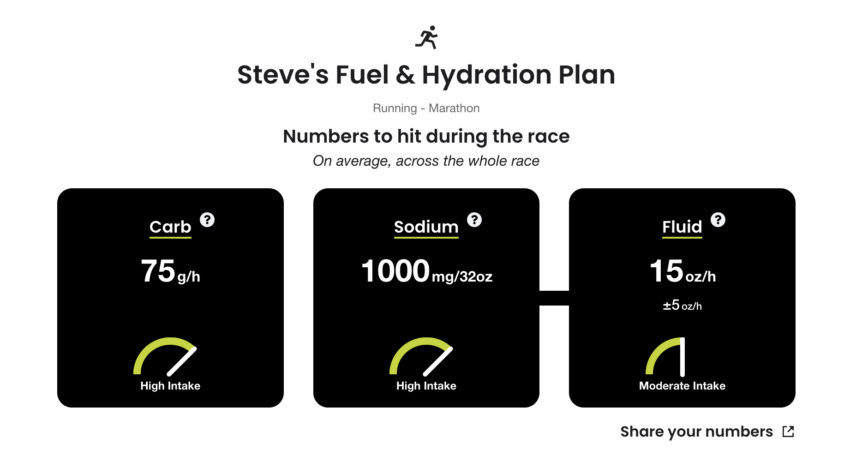
Playing around with their planner this week for a potential fall marathon, I noticed the numbers would be slightly different this time around. More carbs and more fluid for some reason.
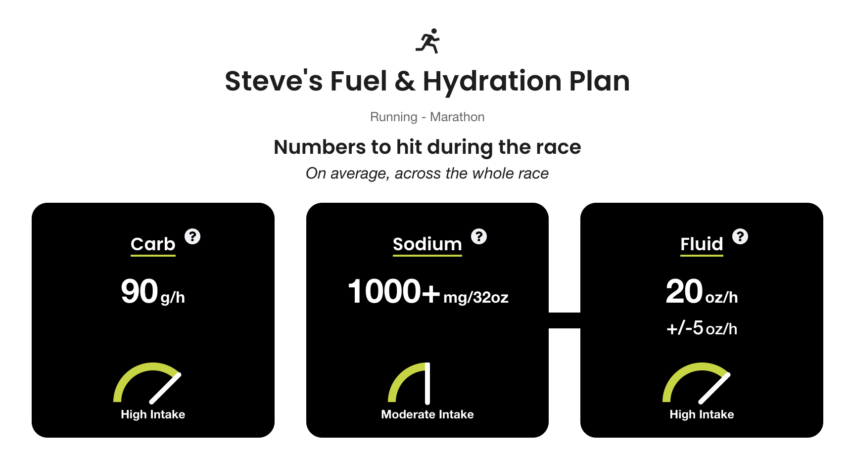
Numbers to hit during the race (on average, across the whole race):
- Carbohydrate – 90 g per hour
- Sodium – 1000 mg per 32 oz
- Fluid – 20 oz per hour
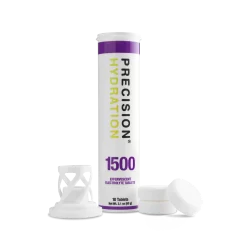
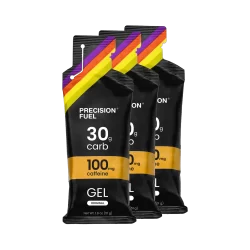
Pre-race hydration would consist of 1 x PH 1500 in 16oz water 60-90 minutes before the race, and 1 x PF 30 Caffeine Gel about 15 minutes before the start of the race.
During the race I would need to aim for 20oz of water per hour with an Electrolyte Capsule every 15 – 20 minutes or so, and 3 x PF 30 Gels per hour.
Pre-race hydration
60-90 mins before – 1 x PH 1500 in 16oz water
Drinking a strong electrolyte drink before a race (aka “preloading”) can significantly improve your performance.
What to do:
- Drink 1 packet or tablet of PH 1500 with 16oz of water the evening before the race
- Drink 1 packet or tablet of PH 1500 with 16oz of water ~60-90 minutes before the start
- Finish around 45 mins before you start to allow your gut to absorb it
- Drink the electrolytes in water you’d have drunk anyway so you don’t overdo it
- DON’T just drink lots of water before a race! You can end up diluting your blood sodium levels, increasing the risk of a race-ruining condition called hyponatremia (low blood sodium levels)
Why?
- It’ll boost blood volume, a proven way to enhance performance during intense exercise, especially in the heat
- It’ll help the cardiovascular system cool you down and deliver oxygen to your working muscles. This reduces fatigue and enables you to maintain your performance for longer
- PH 1500 electrolyte drink is a very effective preloader as it contains ~3x more sodium than typical sports drinks
Pro tip:
Preloading with a strong electrolyte drink may also help you avoid cramp, which can be triggered by sodium depletion
Pre-race fueling
~15 mins before – 1 x PF 30 Caffeine Gel
Taking in a small dose of carbohydrate immediately before the start of a race will deliver additional fuel to be used in the early stages and increase your focus and energy levels.
Many athletes will also benefit from getting some caffeine on board prior to setting off.
What to do
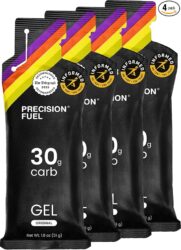
- Eat 1 PF 30 Caffeine Gel in the 15 mins or so before you start. It’ll deliver 30g of carb and 100mg of caffeine.
- Opt for 1 PF 30 Gel instead if you prefer not to use caffeine
Why?
- Simple carbs taken in the last 15 mins will hit your bloodstream around the start of the race, increasing energy availability just as your energy use is ramping up
- Caffeine takes about 15 mins to have an initial impact. It then peaks in your bloodstream around 45-60 minutes after ingestion

During the race
~20oz of water per hour with an Electrolyte Capsule every 15 – 20 minutes or so and 3 x PF 30 Gels per hour
Hydration
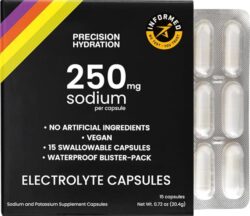
~20oz of water per hour with an Electrolyte Capsule every 15 – 20 minutes or so.
On the day, factors such as your pace and the weather will influence what you actually need. Start by following your plan, but adjust your intake according to how you feel as the race unfolds.
This is a critical skill to hone when preparing for longer races, as the potential for significant over or under-consumption when strictly following a premeditated plan increases the longer an event lasts.
Pro tip:
Drinking from cups at aid stations can make it tricky to track how much fluid you’re consuming. As a rough guide, taking in a large mouthful of fluid should deliver around ~60-70ml (2-2.5oz)
Pro tip:
Squeeze aid station cups across the top to form a slit to pour the water out of. This’ll reduce the amount that gets spilled
Pro tip:
It’s often faster overall to walk a few paces through aid stations to ensure you get enough fluids on board, rather than trying to drink from cups whilst running at full speed
Energy intake
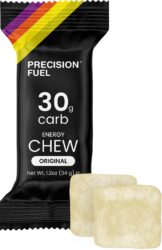
3 x PF 30 Gels or PF 30 Chews per hour
Carb intake is arguably the most critical element of your fuel and hydration plan. Aim to take in 90g of carb per hour on average across the whole race. This equates to 3 PF 30 Gels per hour. If you’re not carrying your own gels, you’ll need to do the math based on what’s available on course.
The more energy you can consume in the early stages of the run, the stronger you’ll be able to finish, so don’t restrict your carb intake if you’re tolerating it well. Adjust your energy intake dynamically for the best results.
Pro tip:
Set an alert to eat 1 PF 30 Gel every 25mins.
Pro tip:
Consider carrying your own fuel if possible. Doing so means you won’t accidentally miss picking something up at a busy feed station and you’ll have access to energy whenever you need it
Pro tip:
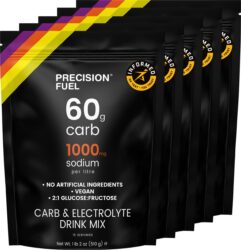
If you prefer liquid calories, consider carrying Carb & Electrolyte Drink Mix in your bottles or flasks. It contains 60g of carb per litre (32oz) serving, so can provide some or all of your requirements, depending on the total amount that you drink
Caffeine
Beyond carbs, sodium and fluid, caffeine is one of a very small number of substances that is proven to improve performance for most endurance athletes as it can help stave off mental and physical fatigue.
If you’re unsure whether you should be using caffeine, PF 30 Gel
If you do plan to use it, the recommended dose is 3-6mg per kg (1.4-2.7mg per lb) of body weight, across the race as a whole including the immediate build up.
For most fast runners, pre-caffeinating during the hour before exercise will be enough. But you may wish to consider consuming a dose in the region of 100-200mg during the race as well.
Don’t wait too long into the race to get your caffeine on board as it takes ~45-60 minutes to peak in your bloodstream.
If you’re sensitive to caffeine, a lower dose may in fact be all that’s required to stimulate caffeine’s ergogenic effect; so do some testing in training to find out what works for you.
Caffeine:
To hit your numbers, swap some of your PF 30 Gels or PF 30 Chews out for PF 30 Caffeine Gels, which deliver 100mg of caffeine as well as 30g of carb. If necessary, supplement this with some Coke or Red Bull from the aid stations (Coke contains ~10mg per 100ml/3.5 oz; Red Bull contains ~32mg per 100ml/3.5oz).
Final checks
Checklist for adjusting your intake
Signs you may need to drink more:
- Feeling thirsty/dry mouth
- Heart rate rising compared to power output/effort
- Tight, twitchy or crampy muscles
Signs you may need to drink less:
- Feeling bloated
- Feeling water ‘sloshing’ in your stomach
- Peeing too frequently
Signs you may need to increase your energy intake:
- Hunger
- Attitude or mood deteriorating
- Craving sugar
Signs you may need to decrease your energy intake:
- Feeling/being sick
- Bloating
- Upset stomach
So, all in all a pretty comprehensive strategy and much more scientific than how I used to fuel during marathons in the “old days”. The plan worked well at both Chester and Boston, and if I do tow the line at a marathon in a few months time, I hope it’ll be just effective this time around too.


Pingback: Effective Marathon Fuel & Hydration Plan for Runners – longrunluxe