Coach Jay Johnson’s Myrtl Routine is a dynamic set of exercises designed to enhance hip strength, mobility, and stability. The routine specifically targets the muscles surrounding the hips, including the hip flexors, abductors, and external rotators. Its benefits extend beyond mere flexibility, making it a valuable addition to any fitness or training regimen.
Firstly, the Myrtl Routine aids in injury prevention by promoting balanced muscle development around the hip joint. Strong and flexible hips contribute to improved biomechanics, reducing the risk of injuries such as IT band syndrome and patellofemoral pain.
Secondly, this routine is particularly beneficial for runners and athletes. It helps enhance stride mechanics, allowing for a smoother and more efficient running gait. Improved hip strength and mobility can lead to increased power generation and overall athletic performance.
Additionally, the Myrtl Routine is accessible to individuals of various fitness levels. The exercises can be adapted to suit different needs and can be performed without the need for specialized equipment. This makes it a practical and time-efficient solution for those looking to incorporate effective hip-focused exercises into their routine.
As an Amazon Associate I earn from qualifying purchases.
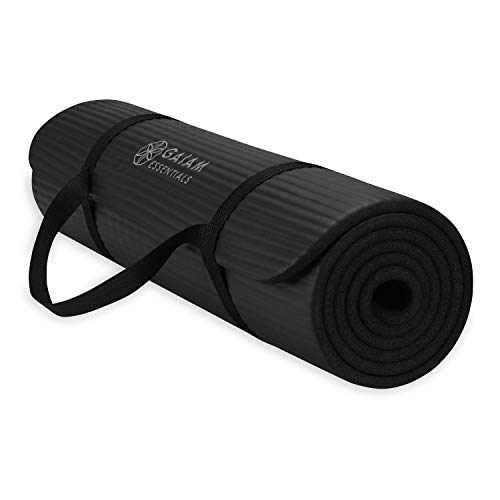
A Comfortable Mat for the MYRTL Routine
A non-slip exercise mat provides a more comfortable surface for floor exercises such as clams, lateral leg raises and donkey kicks. It’s optional, but useful if you’re doing the MYRTL routine on a hard floor.
View on AmazonIn summary, Coach Jay Johnson’s Myrtl Routine offers a comprehensive approach to hip health, encompassing injury prevention, enhanced athletic performance, and adaptability for individuals of diverse fitness levels. Integrating this routine into a regular exercise program can contribute to overall well-being and physical resilience.
Why I Do MYRTL
I’ve incorporated the MYRTL routine into my training because I believe looking after my hips and glutes is an important part of staying healthy as a runner.
- Glute and hip strength: Targets muscles that help stabilise the hips and pelvis while running.
- Hip mobility: Encourages a better range of movement and helps me feel less stiff.
- Running form: Works on the strength and control needed to maintain good movement patterns, particularly when fatigue sets in.
- Injury prevention: While no exercise routine can guarantee I’ll stay injury-free, addressing potential weaknesses seems like a sensible investment.
- Consistency: It’s a relatively simple routine that fits around my regular running without adding another demanding workout.
I typically do the MYRTL routine once or twice a week. It’s a manageable addition to my training, and I find that a little consistency goes a long way. I don’t treat it as another hard workout — it’s simply part of looking after my body so I can keep running.
I don’t expect MYRTL to magically make me faster. For me, it’s about doing the little things that might help me stay healthy, maintain decent running form and, most importantly, keep training consistently.
MYRTL vs. SAM: What Does Coach Jay Johnson Recommend Now?
Update (November 2026): MYRTL is the routine I originally learned and still use once or twice a week, but Coach Jay Johnson has since developed newer approaches to post-run strength and mobility.
Jay first replaced MYRTL with SAM (Strength and Mobility), which organised exercises into progressive routines. He has since moved beyond SAM as well. His current system uses colour-coded Red, Orange, Yellow and Green progressions, with different routines for easy and hard running days.
In his explanation of how post-run strength work has evolved, Jay describes why he no longer recommends MYRTL as a complete, standalone programme. He also offers free Red and Orange routines with exercise videos for runners who want to try his newer approach. The Yellow and Green progressions are part of his training systems.
Interestingly, several familiar MYRTL movements — including clams, lateral leg raises, donkey kicks and fire hydrants — still appear in his newer routines. So although the overall programme has evolved, many of the exercises remain useful building blocks.
I’m keeping this page as a reference to the original MYRTL routine, which I still find a manageable addition to my own training. If you’re looking for Jay’s latest recommendations, though, I’d encourage you to explore his current post-run progressions too.
Watch the MYRTL Routine
Prefer to follow along with a video? Watch the routine below without leaving this page.
MYRTL Routine

Clams (8 reps on each side)

Lateral Leg Raise (5 reps neutral foot, 5 reps toe pointed down, and 5 reps toe pointed up)

Donkey Kicks (8 reps on each side)

Donkey Whips (5 reps on each side)

Fire Hydrant (8 reps on each side)

Knee Circle, Forward (5 reps on each side)

Knee Circle, Backward (5 reps on each side)

Hurdle Trail Leg, Forward (5 reps on each side)

Hurdle Trail Leg, Backward (5 reps on each side)

Lateral Leg Swing (10 reps on each side)

Linear Leg Swing (10 reps on each side)

Linear Leg Swing, Bent Knee (10 reps on each side)
Want to Add a Little Resistance?

Resistance Loop Exercise Bands
The original MYRTL routine doesn’t require equipment, but mini resistance bands are an optional way to make exercises such as clams and lateral leg raises more challenging. Start with light resistance and keep your movements controlled.
View on Amazon
Pingback: Marathon Training Thoughts Before the Philly Marathon • Mile By Mile