After more than four decades of running, I’m still looking for ways to keep training consistently and lining up on race day. At 60, that includes paying attention to the everyday routines that might help me along the way.
Several supplements have found a place in that routine. Some I’ve taken for years, one was recommended by my dermatologist, and another only comes out before shorter races.
I thought it might be useful to share what I take, why I started and what I believe I get from each one. I can’t put a number on how much they help, and in some cases I honestly don’t know whether they make a measurable difference.
A quick note: These are my personal choices and experiences, not a recommendation to copy my routine or doses. Speak with your own healthcare professional about what suits your health, medications and needs.
Affiliate disclosure: This post contains affiliate links. As an Amazon Associate I earn from qualifying purchases, at no additional cost to you.
Doctor’s Best Glucosamine Chondroitin MSM
My routine: Three capsules each morning, taken daily for just over 18 months.
I started taking glucosamine for general joint support. There wasn’t a particular injury behind this addition—more an interest in looking after joints that have covered quite a few miles over the years.
The suggested serving on my container is four capsules. I take three, which seems to work well for me and makes the container last a little longer. That’s simply my own routine; it doesn’t establish that three capsules are an effective dose.
The evidence deserves a mention here. Research on glucosamine for knee osteoarthritis has produced mixed results, and that research doesn’t establish that it protects healthy runners’ joints. I include it for general support, without claiming it prevents wear and tear or rebuilds cartilage. Research background: NCCIH.

Doctor’s Best Glucosamine Chondroitin MSM
Glucosamine, chondroitin and MSM in capsule form. I take three each morning as part of my joint-support routine.
Vital Proteins Collagen Peptides
My routine: Two scoops in my black coffee every morning, since 2019.
Collagen became part of my routine after a meniscus tear. I’d read that it might help with healing and repair, which prompted me to give it a try. These days, my reason for continuing is general joint and tendon support.
I’ve also wondered whether it played any part in my recovery from proximal hamstring tendinopathy. That’s a possibility I’ve considered rather than something I can demonstrate. I completed a structured rehabilitation program, and I can’t separate any contribution from collagen from the work I put into rehab.
There is some encouraging research on particular collagen supplements alongside exercise. For example, a small pilot trial studied specific collagen peptides with calf-strengthening exercises in people with Achilles tendinopathy. That doesn’t prove that the product in my coffee healed my meniscus or helped my hamstring, but it gives some context to the interest in collagen and tendons. Read the pilot study.
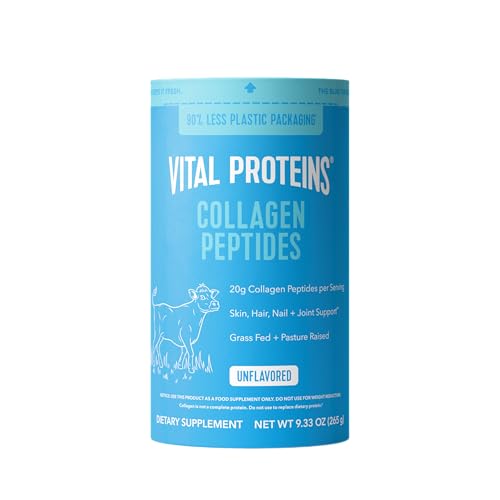
Vital Proteins Collagen Peptides
Unflavoured collagen peptides that I stir into my morning black coffee. Part of my routine since 2019.
MGSPORT Magnesium
My routine: One capsule each evening before bed, for roughly two to three years.
I started taking magnesium with the aim of helping with cramps, and I do believe it has made a positive difference. That’s the main reason it has stayed in my evening routine.
My experience comes with a qualification: it isn’t proof that magnesium caused the improvement. A Cochrane review found little evidence of meaningful benefit for common cramps in older adults and found no randomized trials specifically addressing exercise-associated cramps. I’m sharing what I’ve noticed, rather than presenting magnesium as a proven solution for runners. Read the Cochrane review.

MGSPORT Magnesium
My evening magnesium supplement. I started taking it for cramps and feel it has made a positive difference.
Nutricost Niacinamide (Vitamin B3)
My routine: Two 500 mg capsules daily (1,000 mg total), since early September 2026, on my dermatologist’s recommendation. The suggested serving on the product label is one 500 mg capsule.
My dermatologist recommended over-the-counter nicotinamide as an oral intervention for nonmelanoma skin-cancer prevention. That is the reason I take it.
In 2024, I had a melanoma in situ removed from my arm. Then, in June 2026, I had two basal cell skin cancers removed—one from my scalp and another from my right calf. Both were removed with clear margins, meaning no cancer cells were found at the edges of the tissue taken out. That history is the background to my dermatologist’s recommendation.
Niacinamide, also called nicotinamide, has been studied for skin-cancer prevention. A major trial, using 500 mg twice daily, found fewer new nonmelanoma skin cancers in a particular high-risk group while participants were taking it. My daily total is also 1,000 mg. The trial studied a particular high-risk group; it does not establish that nicotinamide prevents melanoma or melanoma recurrence. Read the ONTRAC trial.
For me, this is part of an individual plan with my dermatologist. It doesn’t replace sun protection or skin checks, and I wouldn’t suggest that readers start it simply because it appears on my list.

Nutricost Niacinamide
Vitamin B3 as niacinamide, with 500 mg per capsule. I take two capsules daily on my dermatologist’s recommendation.
HumanN SuperBeets Heart Chews
My routine: Two chews daily when I’m taking them; used on and off for several years.
My blood pressure has always been good, so I didn’t start these to address high blood pressure. I’d read positive reviews about the potential benefits of beets and decided to try them.
I don’t have a clear before-and-after result to share with this one. It’s something I’ve returned to over the years, rather than a product I can credit with a particular health improvement or race performance.
These chews are also a separate product from the beet powder I use before races. I don’t assume the two provide the same ingredients, doses or effects.

HumanN SuperBeets Heart Chews
Beetroot and grape seed extract chews. I take two daily when I’m using them, on and off over the years.
An Occasional Addition: Huel Daily Greens
My routine: One serving as needed, when I feel my diet could do with some improvement or a bit of a boost. I started using it around three or four months ago.
Huel Daily Greens, in the Original flavour, is another product I use, although less frequently than the others on this list.
I tend to reach for it when I feel my diet hasn’t been quite where I’d like it to be. That’s my reason for using it, rather than a claim that I’ve measured a particular benefit or that it replaces eating well.

Huel Daily Greens Original
Original-flavour greens powder. An occasional addition when I feel my diet could use a bit of attention.
Topping Up Calories: Huel Black Edition
My routine: Two scoops with 17 ounces of cold water and ice, as needed when I feel I’m falling short on calories. After a long run, I also blend it with milk and a banana.
Huel Black Edition Chocolate is a meal replacement that I find useful on days when I haven’t eaten enough. It has a slightly different role from the supplements above: it’s a convenient way for me to get some extra food in.
It also makes a great post-long-run smoothie. I blend it with milk and a banana, which is a combination I really enjoy after putting in the miles.

Huel Black Edition Chocolate
Chocolate meal replacement powder. I use it to top up calories or blend it with milk and a banana after long runs.
My Race-Day Extra: HumanN Endurance Beet Powder
My routine: Two scoops (10 g) of Wild Cherry powder in 4–6 ounces of water, shaken and drunk immediately, approximately 30 minutes before a 5K or 10K.
This is an occasional race-day addition rather than a daily supplement.
I do believe it gives me a slight edge when racing shorter distances. Hard to prove, though! There are plenty of other things affecting how a race goes, and I haven’t done a controlled comparison with and without it.
For now, that’s the honest assessment: it’s part of my pre-race routine, I feel it helps, and I can’t tell you how many seconds—if any—it saves. The timing above describes what I currently do, rather than a claim about the best timing for everyone.

HumanN Endurance Beet Powder
Wild Cherry beet powder for my pre-race drink. I use two scoops in water before selected 5K and 10K races.
Keeping It in Perspective
That’s my current list: five supplements in my regular routine (including the SuperBeets chews I use on and off), plus Huel Daily Greens occasionally, Huel Black Edition when I want to top up calories or make a recovery smoothie, and the beet drink before selected races.
Some have a clearer purpose than others. The niacinamide comes from a conversation with my dermatologist. Magnesium is something I feel has helped with cramps. With collagen and glucosamine, my reasons centre on joint and tendon support, while acknowledging the limits of what I can personally judge.
As Richmond approaches, I’m still putting my faith in the training I’ve completed, getting my recovery right and sticking with the fueling plan I’ve practised. These supplements sit alongside that preparation. I can share my routine, but I can’t give them credit for the miles or the finish times.
Do you take any supplements as part of your running routine? I’d be interested to hear what you use and why.