With the Richmond Marathon approaching, I’ve settled on my race-day shoes: the ASICS METASPEED Edge Tokyo. But the decision wasn’t quite as straightforward as it sounds. I’ve also been enjoying the PUMA Fast-R NITRO Elite 3 and, more recently, the TYR Valkyrie Elite 2.
All three are lightweight carbon-plated racing shoes, but they have very different personalities. The PUMA feels the most aggressive, the ASICS offers the balance I’m looking for over 26.2 miles, and the TYR strikes me as something of a cross between the two.
I’ve raced the PUMA at the recent Race for Hope 5K, where I ran 18:41, and wore the ASICS for the Crawlin’ Crab Half Marathon (1:27:50). I’ve logged 38 miles in the TYR so far, including an 8-mile run at 7:33/mile, a brisk 7 miler and an enjoyable 6-miler averaging 6:44/mile (including an easy warm-up mile). That’s important context: these are my personal impressions, not a laboratory test or a claim that I’ve raced a marathon in all three.
For more on the races and workouts behind my Richmond build, see my Richmond Marathon 2026 training update.
Three shoes, three personalities
ASICS METASPEED Edge Tokyo: My choice for Richmond. Lightweight, responsive and, for me, the most appealing option for maintaining a controlled marathon rhythm.
PUMA Fast-R NITRO Elite 3: The aggressive speed machine. I raced it at Race for Hope and love the propulsion, but I’m not convinced I want that pronounced sensation for the full 26.2 miles.
TYR Valkyrie Elite 2: The intriguing newcomer. I’ve now logged 38 miles, with my longest outing an 8-miler at 7:33/mile. A 6-mile run averaging 6:44/mile (including an easy first mile) and another brisk 7-miler have only added to the appeal. It feels like a cross between the ASICS and PUMA, with a rocker that seems to encourage me onto my forefoot and roll me forward. The one reservation has been a slightly snug forefoot and occasional toe discomfort, although thicker Injinji toe socks helped on my latest run.
Technical comparison
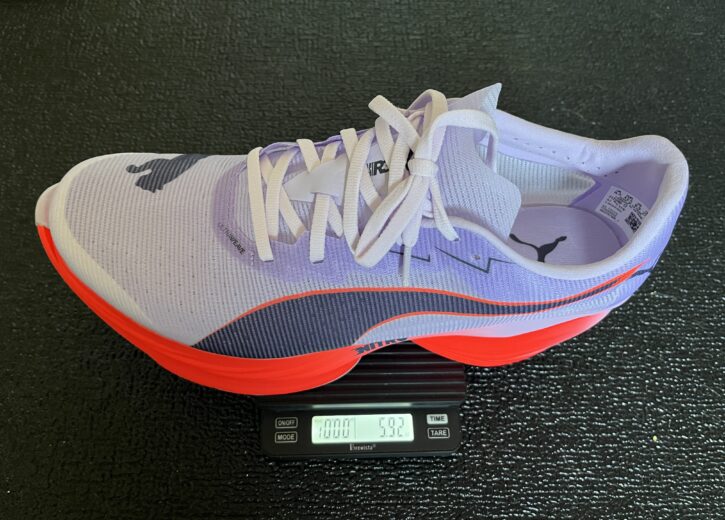
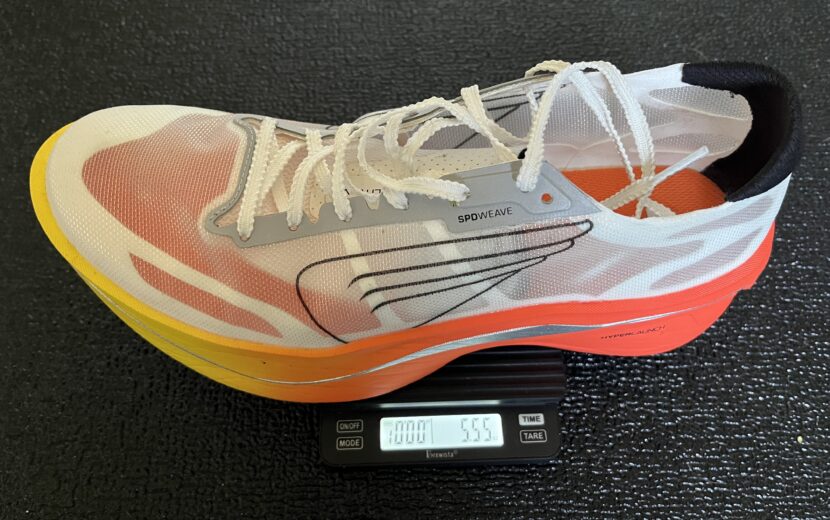
All three pairs are men’s US size 9.5. I weighed each shoe myself; the figures below are per shoe, not per pair. The fit and ride comparisons are based on my own running, and the TYR has had considerably less testing so far.
| Specification | ASICS Edge Tokyo | PUMA Fast-R 3 | TYR Valkyrie Elite 2 |
|---|---|---|---|
| My US 9.5 weight (one shoe) | 6.00 oz / 170.1 g | 5.92 oz / 167.8 g | 5.55 oz / 157.3 g |
| Heel / forefoot stack | 40 / 35 mm | 39 / 31 mm | 40 / 34 mm |
| Drop | 5 mm | 8 mm | 6 mm |
| Foam | FF LEAP + FF TURBO PLUS | NITROFOAM Elite | HyperLaunch |
| Plate | Carbon | PWRPLATE carbon | Full-length carbon |
| Upper | MOTION WRAP 3.0 | ULTRAWEAVE | SPDWEAVE |
| Fit (my experience) | Snug, secure and comfortable for longer racing | Snug racing fit; aggressive, with massive energy return | Snug forefoot, minor toe discomfort, but a super fun, fast ride |
| Laces | Serrated; secure | Softer, slightly spongier feel | Serrated; similar to ASICS |
| Heel counter / lockdown | Most heel padding; no rubbing | Moderate heel padding; no rubbing | Least heel padding; no rubbing |
| Outsole | ASICSGRIP | PUMAGRIP | TYRTAC |
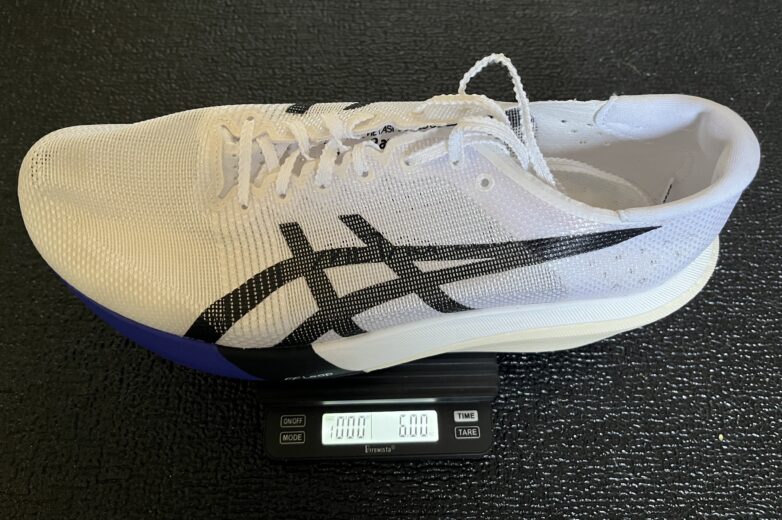
ASICS METASPEED Edge Tokyo: My Richmond choice
I wore the ASICS for the Crawlin’ Crab Half Marathon and have completed all my key Richmond long training runs in this shoe: 18, 20.6, 19.2 and 16 miles. That’s a lot more reassuring than a shoe simply feeling spectacular over a few fast miles. The Edge Tokyo is tried and tested, and I know what to expect from it when the miles start adding up.
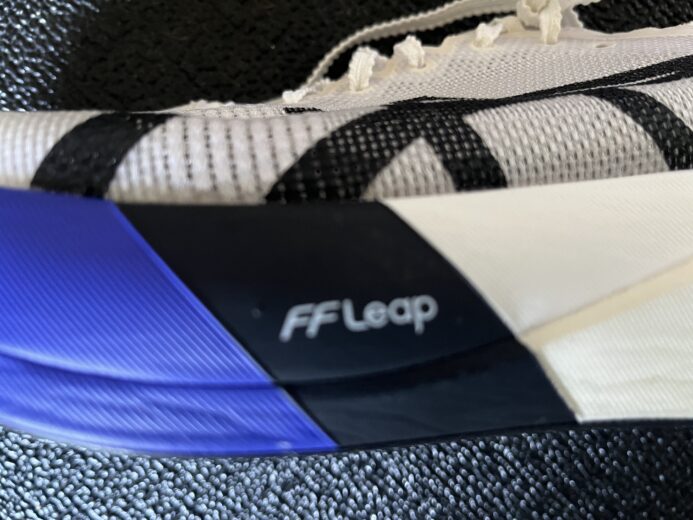
The Edge Tokyo combines FF LEAP and FF TURBO PLUS cushioning with a carbon plate. It offers a lightweight, responsive ride without the same pronounced aggressive sensation I get from the PUMA. At my target marathon pace of around 6:52 per mile, I want a shoe I can settle into.
Pros: Lightweight, lively cushioning, a smooth racing feel and, most importantly, proven comfort and confidence through all my key Richmond long runs.
PUMA Fast-R NITRO Elite 3: Fast and aggressive
I raced the Fast-R 3 at the recent Race for Hope 5K, finishing in 18:41. It’s an incredibly exciting shoe when you’re pushing the pace. The extended carbon plate, NITROFOAM Elite cushioning and pronounced rocker combine to produce a very propulsive sensation.
I’ve also completed 19-mile and 15-mile long runs in the PUMA, and it performed well on both. Even so, I have a nagging feeling I’d be wishing for a little more comfort over the final 10K of a marathon. It’s not that the shoe can’t handle the distance; I simply have more faith and confidence in the ASICS for Richmond.
That aggressive character is also why I’m reluctant to choose it for Richmond. I’m sure it works brilliantly over a marathon for some runners, but for me there’s a difference between enjoying a shoe in a fast 5K and trusting it for 26.2 miles.
Pros: Fantastic propulsion, responsive cushioning, confident grip and a real sense of speed.
Cons: The aggressive geometry isn’t necessarily what I want late in a marathon, particularly as fatigue sets in.
Durability: How are they holding up?
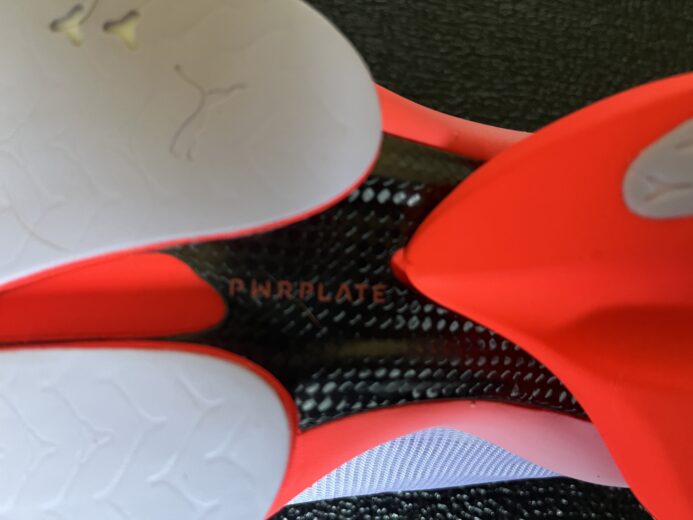
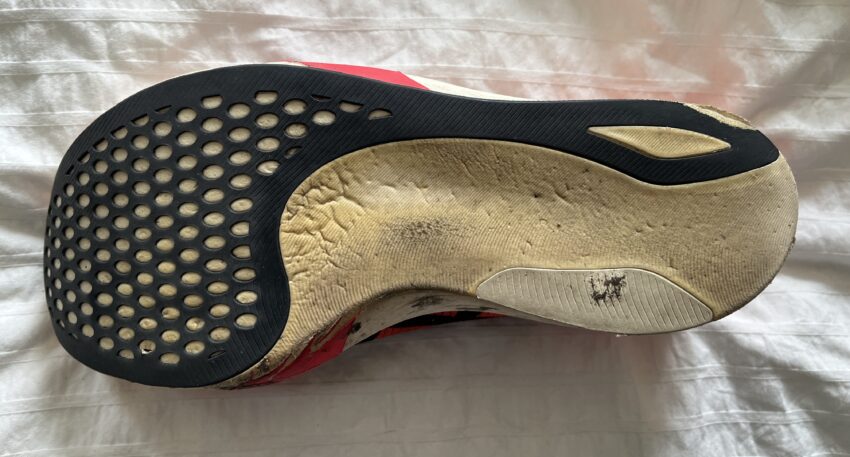
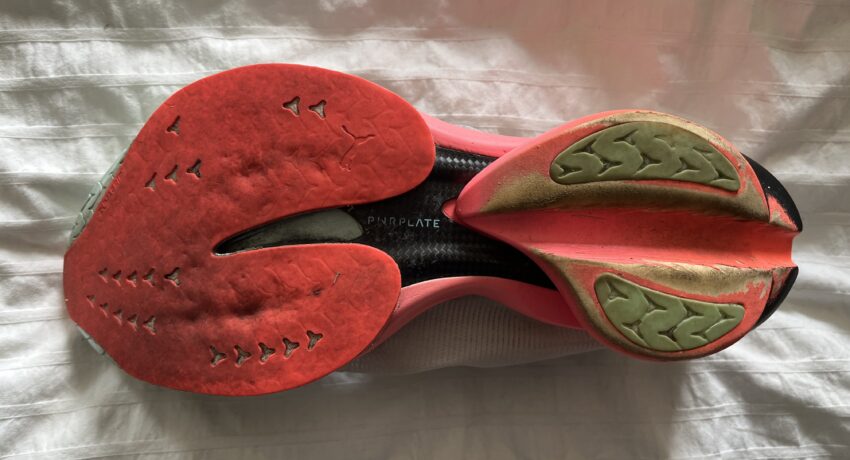
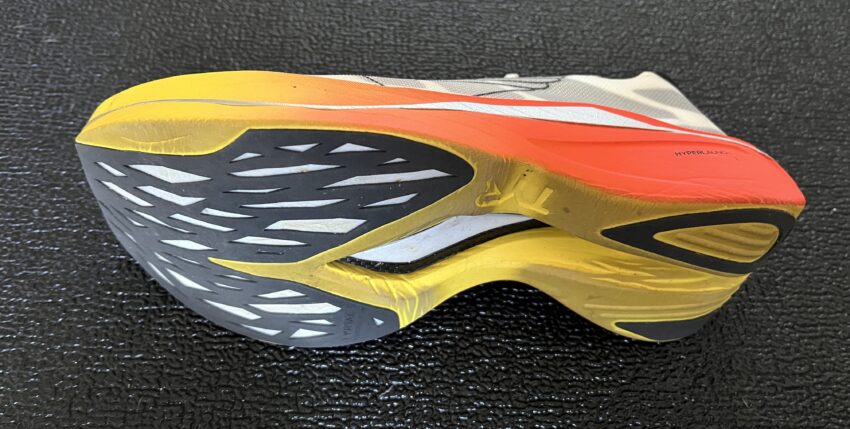
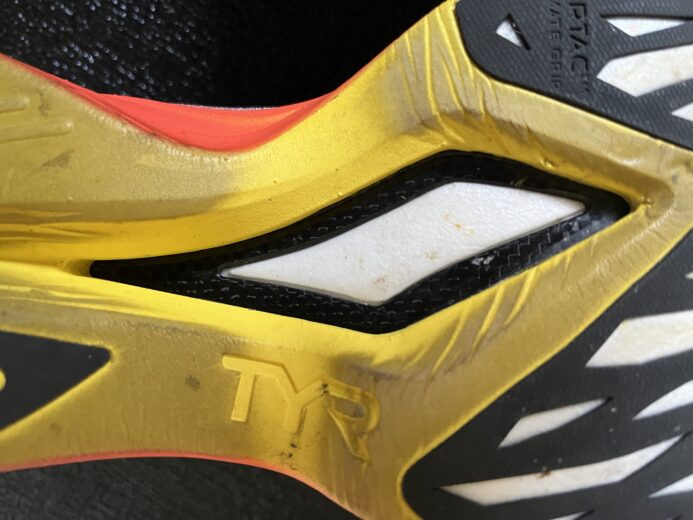
My original ASICS pair has now reached 266 miles, while my original PUMA pair has approximately 161 miles. Outsole wear has been decent on both, based on my experience so far. The ASICS outsole photograph below was taken at 250 miles. The TYR has 38 miles, so it’s too early to make a meaningful long-term durability judgement, although the early signs are encouraging. Traction has been excellent in all three shoes, but the TYR’s grip has particularly impressed me. The rubber coverage looks nicely balanced, especially across the forefoot, without feeling excessive. These close-up photographs let you see the wear for yourself.
TYR Valkyrie Elite 2: Somewhere in the middle?
The TYR has been a pleasant surprise. It’s remarkably lightweight, with responsive HyperLaunch cushioning and a full-length carbon plate. I’ve now covered 38 miles in it, including an 8-mile run at 7:33/mile and a particularly enjoyable 6-miler averaging 6:44/mile with an easy warm-up mile. What stands out more with every run is the way the TYR seems to get me up on my toes and propel me forward. I suspect the rocker geometry plays a big part in that rolling, energetic sensation, although that’s a feel-based observation rather than a technical measurement. Another brisk 7-miler this morning reinforced that impression. Once I’ve recovered from Richmond, I’m really looking forward to testing the Valkyrie Elite 2 on some longer runs.
What interests me most is the combination of characteristics. It has some of the PUMA’s energetic, aggressive personality, but also something of the ASICS’ lightweight, fluid feel. In my mind, it sits between the two.
There is one fit issue worth mentioning: the forefoot is a tad snug for me, and I’ve experienced a little discomfort around a few toes on some runs. On my latest 7-miler I switched to slightly thicker Injinji toe socks, which seemed to give my toes a little more protection than my thinner pair. That helped, but if I bought another pair of TYRs I’d seriously consider going up from my usual US 9.5 to a 10. Getting the fit right when ordering online is tricky, particularly with a brand you’re less familiar with. It’s worth remembering that a minor irritation over seven or eight miles can become a much bigger issue over 26.2.
Pros: Exceptionally light, responsive, enjoyable at faster paces and an interesting alternative to the established racing models.
Cons: Slightly snug forefoot and occasional toe discomfort; my longest test so far is 8 miles.
Fit, uppers, laces and heel lockdown
Foam and carbon plates attract most of the attention, but a racing shoe’s upper, tongue, laces and heel hold matter just as much. A minor irritation over 5K can become a real problem by mile 20.
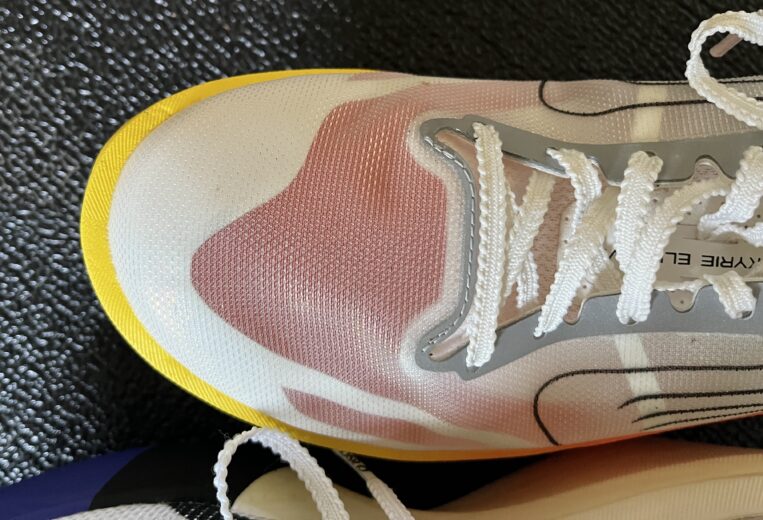
All three uppers are very breathable. PUMA’s ULTRAWEAVE and TYR’s SPDWEAVE feel the thinnest, while the slightly thicker woven ASICS MOTION WRAP 3.0 has still performed beautifully through Virginia’s hot, humid summer. The TYR has a distinctive shimmer and welcome reinforcement around the big toe, an area where I often wear through shoe uppers after several hundred miles.
All three fit snugly, as you’d expect of racing shoes. The TYR has felt a little too snug up front in my usual US 9.5; thicker Injinji toe socks improved comfort on my latest outing, but I’d consider trying a US 10 next time.
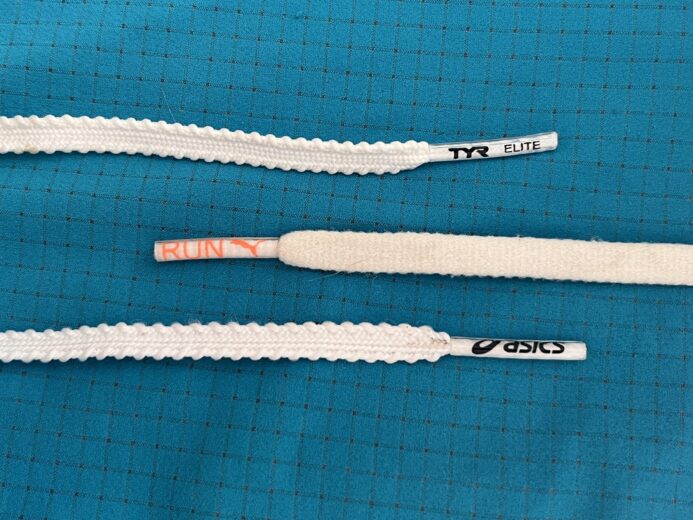
The ASICS and TYR laces are almost identical; PUMA’s feel a little spongier, but work just as well.
Heel-counter padding is greatest in the ASICS, followed by PUMA and then TYR, yet none has caused rubbing or abrasion.
All three tongues are minimal and have worked well for me: ASICS’ suede-like tongue moulds nicely to my foot, PUMA’s paper-thin tongue can crease a little, and TYR’s slightly thicker, better-shaped tongue resists creasing and slipping. I initially worried the TYR tongue was too short, but it hasn’t been a problem.
Which would I choose for each distance?
- 5K: PUMA or TYR — both offer an exciting, aggressive racing feel.
- 10K: TYR is increasingly tempting, although the forefoot fit needs watching.
- Half marathon: ASICS currently has the advantage of my own longer-distance racing experience, but I’d be quite tempted to give the TYR a go and see how they perform.
- Marathon: ASICS METASPEED Edge Tokyo — my confirmed choice for Richmond.
The Richmond decision
At 60, I’m still chasing sub-three-hour marathons, and I’d love to extend my run of at least one sub-three every year since 2005. That means choosing a shoe that gives me confidence for the full distance, not just one that feels fastest during a short workout.
The PUMA is terrific fun when I want to run fast. The TYR has impressed me enormously and deserves more testing, especially over longer distances. But for Richmond, the ASICS gets the nod.
Sometimes the best marathon shoe isn’t the most aggressive or the lightest on paper. It’s the one you trust when the real work begins after mile 20.
These are my personal impressions ahead of Richmond. I’ll continue updating the review as I put more miles on the shoes, particularly the TYR.