It has been a while since I posted a marathon training update. With the Richmond Marathon on November 14 getting closer, here is how the past couple of months have gone. I returned from a two-week holiday in the UK at the end of August and started a more structured training block on August 30. The goal? Another crack at breaking three hours.
Back to training
I have been following the COROS sub-three-hour marathon plan, mixing aerobic endurance runs with tempo sessions, marathon-pace workouts and faster intervals. If you’re interested in the GPS watches and training tools I use, you can explore COROS directly. Through October 26, I have logged approximately 418 miles over 72 running activities. Most full weeks have been between 45 and 60 miles, with a high of just over 60. Not huge mileage compared with some previous marathon builds, but reasonably consistent. At 60, recovery is just as important as the training itself.
Overcoming a hamstring injury
This marathon build has been particularly satisfying because, just a few months earlier, I wasn’t even sure when I’d be running comfortably again.
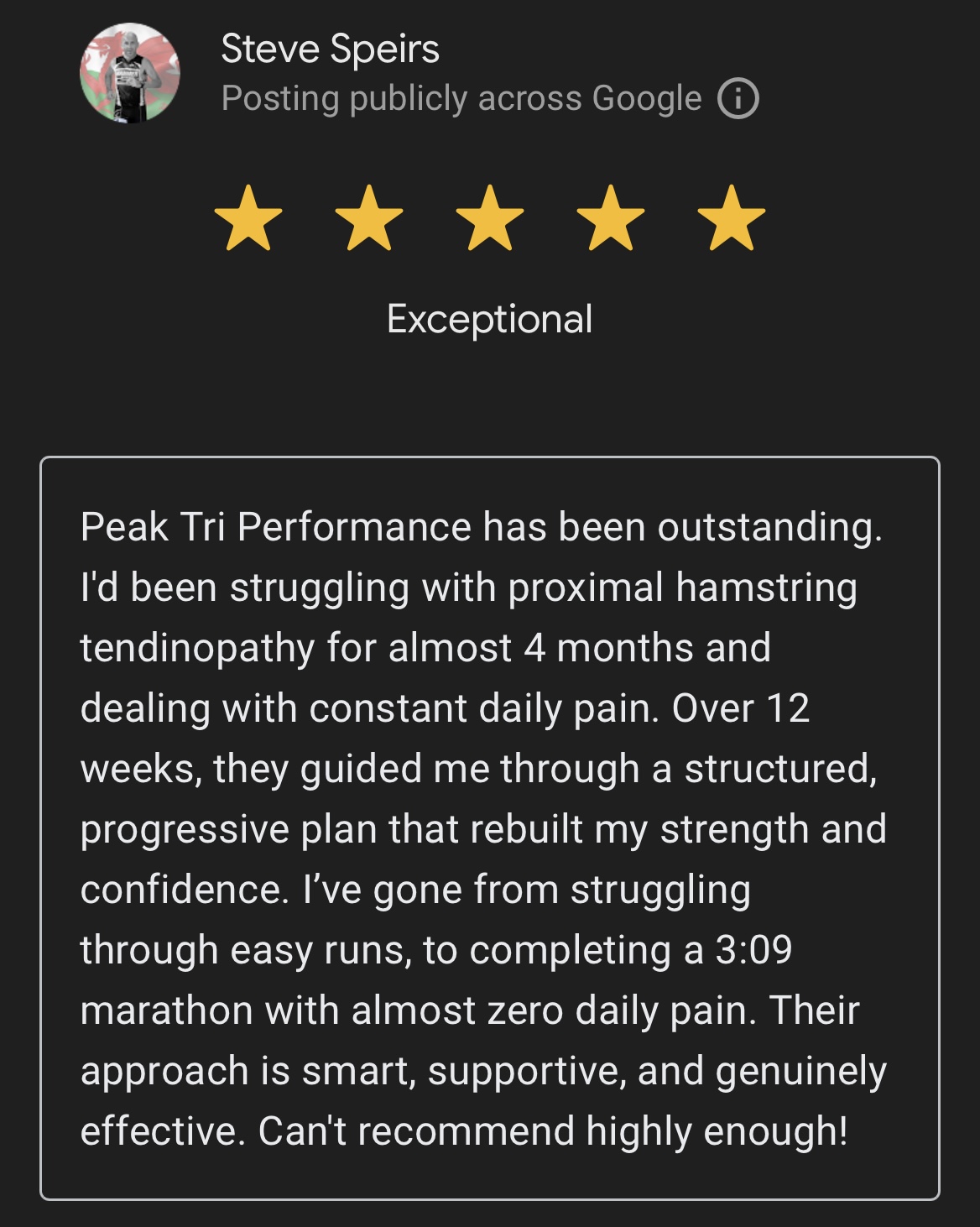
In November 2025, I developed proximal hamstring tendinopathy. What started as a frustrating niggle became a persistent problem, affecting my running and causing almost constant discomfort in everyday life. I initially tried to manage it myself, but by February 2026 it was clear I needed some professional guidance.
I’d discovered Peak Tri Performance through their Instagram account, so contacted them for an assessment. Over the following 12 weeks, they guided me through a structured, progressive rehabilitation programme focused on rebuilding strength and confidence.
The improvement was remarkable. I went from struggling through easy runs to completing a 3:09 marathon with almost no daily pain. Getting back to consistent training has made this Richmond build feel especially rewarding.
I left them a five-star Google review, which sums up how much I appreciated their support:
Five races along the way
One thing I have enjoyed about this block is having five local races on the calendar. A bit of variety, some useful speedwork, and a chance to see whether the training is actually doing anything.
- Elizabeth River Run 10K – 39:40, 1st in the 60-64 age group
- CHAS Foundation 5K – 19:24, 1st in the 60-69 age group
- Neptune Festival 8K – 31:27, 1st in the 60-69 age group
- Crawlin’ Crab Half Marathon – 1:27:50, 1st in the 60-64 age group
- Run for Hope 5K – 18:45, 2nd overall
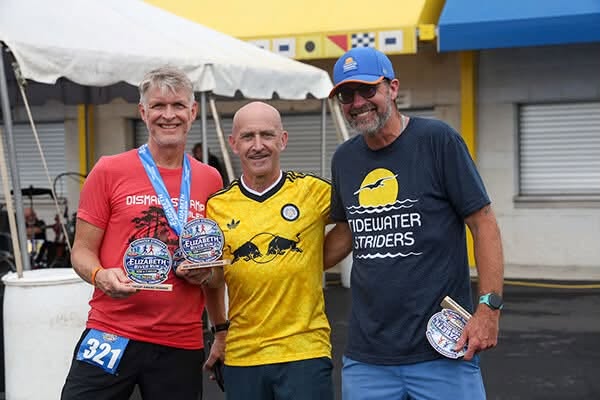
The Elizabeth River Run was a slightly unusual start. Along with several other runners, I missed a section of the course between miles 3 and 4, cutting approximately 0.1 mile off the distance. As a result, the 39:40 is not a legitimate full-distance 10K time. Still a decent workout, though!
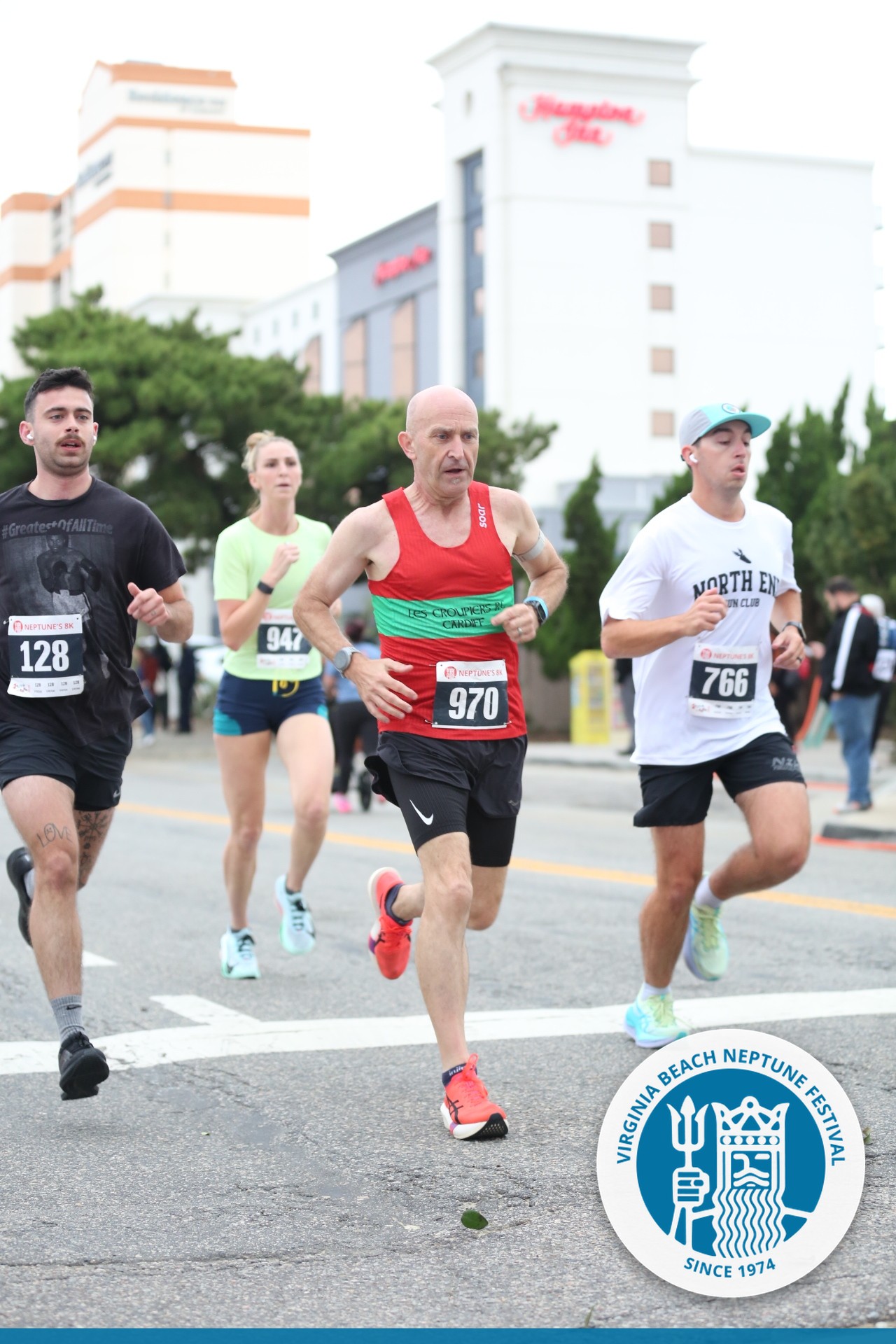
The CHAS Foundation 5K in Suffolk brought a 19:24 finish and an age-group win. Next came the Neptune Festival 8K in Virginia Beach. It was blustery, but I was pleased with 31:27 and another age-group win.
The Crawlin’ Crab Half Marathon on October 4 was probably the most useful race from a marathon-training perspective. Rather than racing flat out, I treated it as a controlled marathon-pace effort and finished strongly in 1:27:50.
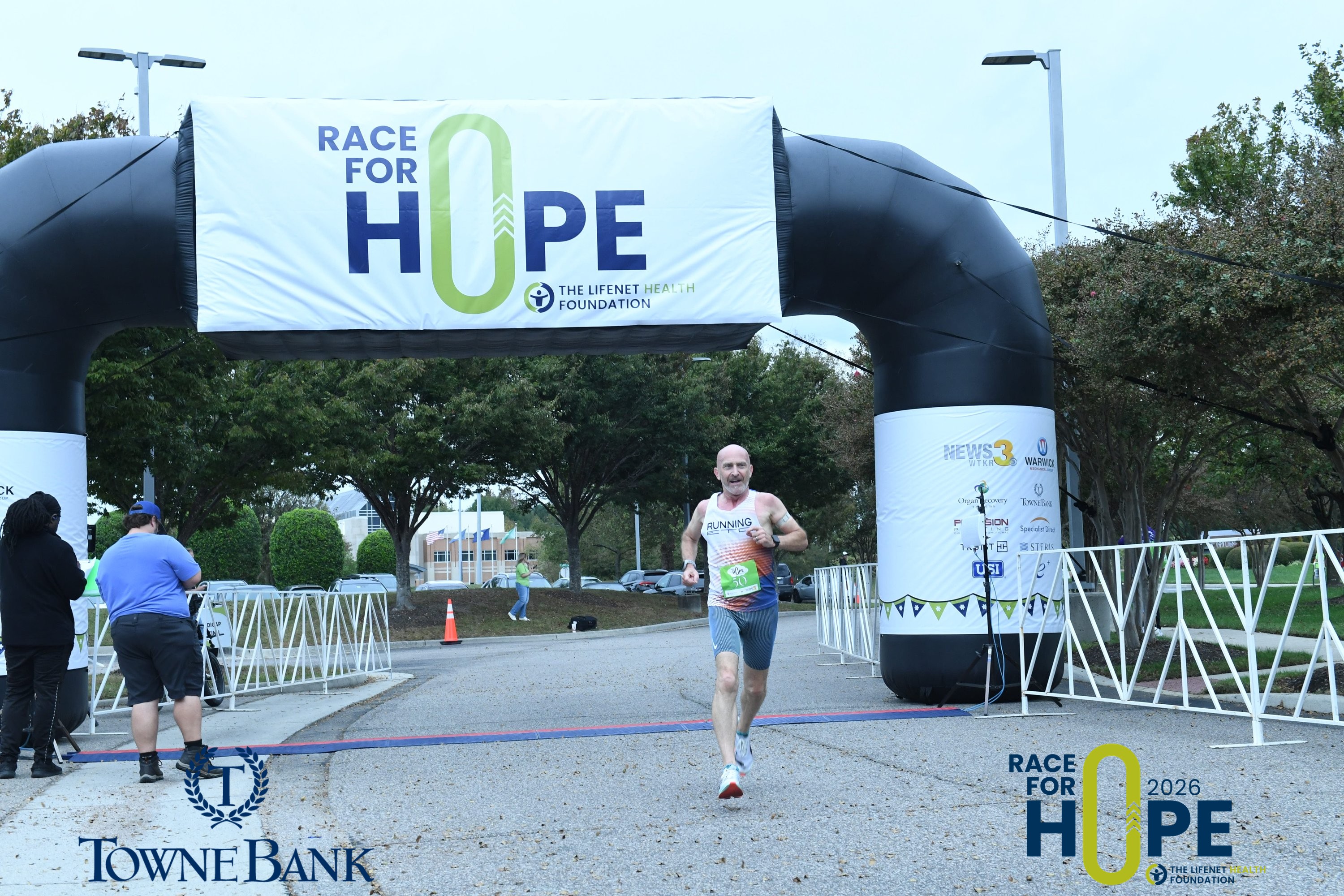
Then came the Run for Hope 5K on October 10. I ran 18:45, my fastest 5K since January 2024, and finished second overall. I also managed to start my watch late, so the official timing was more useful than the COROS recording!
Four age-group wins and a second-place overall finish from five races. Cannot complain about that.
The longer runs
The most encouraging part of the last few weeks has probably been the long runs. Three substantial runs on consecutive weekends:
- October 11 – 18.02 miles at 7:30 per mile
- October 18 – 20.57 miles at 7:18 per mile
- October 25 – 19.24 miles at 7:15 per mile
The first was a reminder about humidity and not paying enough attention to hydration. The following two were better controlled. Hopefully the endurance work will pay off over the final six miles in Richmond. That is usually where things get interesting.
Marathon pace
The target is still sub-three, or approximately 6:52 per mile. The plan has included sessions such as 3 x 3 miles and 2 x 5 miles at marathon pace, alongside threshold and tempo work. Some sessions have felt comfortable, others considerably less so. I have also had days when the COROS performance assessments were not particularly encouraging. I try not to get too carried away with a number on the watch. The races and recent long runs probably tell me more than any single fitness score.
Keeping the sub-three tradition going
I have been fortunate enough to run quite a few sub-three-hour marathons over the years, including Chester in 2023 and both One City and Boston in 2025. I recently looked back at my long-running sub-three marathon streak, too. My Sub-3 Hour Marathon Streak (2005-Present)
It is interesting how different the training has been. Before Chester, I was regularly running considerably more miles than I am now. My preparation for One City and Boston was closer to my current training volume. There is clearly more than one way to prepare for a marathon, especially as you get older.
Earlier this year, extending my sub-three marathon streak seemed a long way off. Now, after a successful rehabilitation and a solid training block, I’m heading to Richmond with a genuine chance of keeping it alive.
The final countdown
November 8 — One Week to Richmond
Just one week to go until the Richmond Marathon, and another decent week of training in the books. I’ve been gradually reducing the mileage as part of my taper, finishing this week with 36 miles spread across seven runs. Nothing particularly dramatic, although I did manage a couple of quicker sessions to keep the legs ticking over. Thursday included 10 × 400m efforts, while Saturday’s run featured five miles at faster than 6:50/mile pace — slightly quicker than my planned marathon pace. Heart rate remained encouragingly low, which is always nice to see at this stage.
I finished the week with a comfortable 8.25 miles on Sunday, averaging 7:47/mile with an average heart rate of 125 bpm. I’ve felt a little sluggish at times during the taper, but that’s fairly normal for me, and I’m hoping the reduced mileage will leave me feeling fresh on race morning. After several months of training, there’s really nothing more to gain fitness-wise now. The hard work is done, the race-day shoes are sorted, and my fueling plan is ready. Just need to stay healthy, get some decent sleep and hopefully keep that sub-3 marathon streak going for another year!
November 1 — Two Weeks to Richmond
Another solid week of training in the books, and with Richmond now less than two weeks away, things are looking good. I kept things nice and easy from Monday through Friday before picking up the pace over the weekend. Saturday’s six-mile run included four miles slightly faster than marathon pace, while Sunday’s 16-miler featured eight alternating miles at a similar effort, averaging around 6:36 per mile for the faster sections. It was encouraging to finish the long run feeling strong, especially with the final faster mile being the quickest of the day. The hard work is pretty much done now. Time to trust the training and enjoy the taper!
The bulk of the training is now behind me. No more 20-mile runs before Richmond. The focus is on reducing the mileage, keeping a little speed in the legs and arriving at the start line rested.
I’m especially grateful to the team at Peak Tri Performance. Their guidance helped me get past a stubborn hamstring injury and return to the consistent training that made this marathon build possible.
I am reasonably happy with how things have gone. The 18:45 5K was a pleasant surprise, the half marathon was encouraging, and the long runs have given me a bit more confidence. Of course, none of that guarantees anything on race day. The marathon has a habit of reminding you that 26.2 miles is a very long way.
Fingers crossed.