How to Prevent Nipple Chafing When Running: My NipStrips Review
If you’ve ever finished a long run or marathon with sore, irritated, or even bleeding nipples, you’ll know that nipple chafing is no laughing matter. It’s one of those running problems that sounds relatively minor until you’re several miles from home and every movement of your shirt feels like sandpaper against your skin.
Fortunately, nipple chafing is usually preventable with the right preparation and protection.
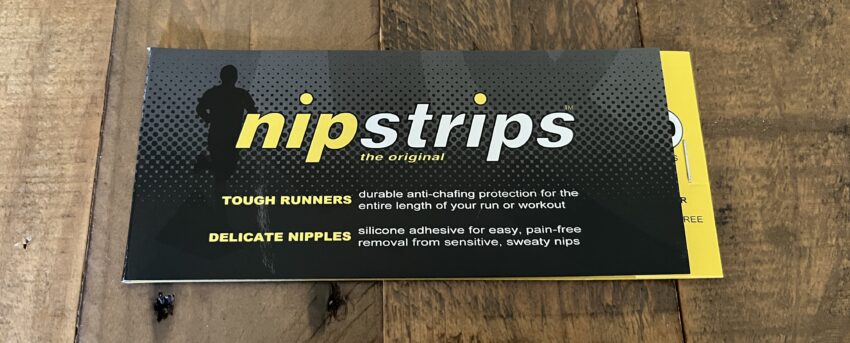
Over the years, I’ve experimented with several ways to prevent nipple chafing while running, including athletic tape and anti-chafing lubricants. Both have worked well for me, but I was curious when I was offered the opportunity to test a product called NipStrips.
These small, self-adhesive silicone discs are designed specifically to protect runners’ nipples from friction during exercise.
And I didn’t just test them on a quick jog around the neighborhood. I put NipStrips through a rather more demanding challenge: 100 miles during a hot, humid 24-hour race.
Here’s how they performed, how they compare with other nipple-chafing solutions, and whether I think they’re worth buying.
Check NipStrips availability on Amazon
Disclosure: I originally received NipStrips as a complimentary media sample for this review. The opinions and experiences described here are my own. As an Amazon Associate I earn from qualifying purchases.
Why Do Runners Experience Nipple Chafing?
Nipple chafing, sometimes referred to as runner’s nipple, is caused by repeated friction between your nipples and your running clothing.
Every time you take a stride, your shirt moves slightly against your skin. Multiply that movement by thousands of steps during a long run, and the resulting irritation can become extremely uncomfortable.
Several factors can make nipple chafing worse:
- Long-distance running: The longer you run, the more opportunities there are for friction and irritation.
- Sweat and moisture: Damp clothing can increase friction, particularly during hot and humid conditions.
- Running shirts: Certain fabrics, seams, and poorly fitting shirts can rub against sensitive skin.
- Rainy weather: A soaking-wet running shirt can create similar problems to excessive sweating.
- Sensitive skin: Some runners are simply more susceptible to friction-related irritation than others.
For marathon runners and ultrarunners, nipple protection is worth considering before race day rather than waiting until irritation develops.
Once your nipples are already sore, even a short run can become unpleasant.
How to Prevent Nipple Chafing When Running
There are several ways to prevent nipple chafing, and the best solution often comes down to personal preference.
1. Apply an Anti-Chafing Lubricant
Anti-chafing products create a protective barrier between your skin and clothing, helping reduce friction.
I’ve used Squirrel’s Nut Butter on numerous occasions, and it’s been an effective option for me.
The main advantage is simplicity. Apply a little lubricant before your run, and you’re ready to go.
However, depending on the conditions and duration of your run, you may need to reapply it. Some products can also leave residue on clothing.
2. Use Athletic Tape
Another option is to cover your nipples with athletic tape before running.
I’ve frequently used RockTape for this purpose, particularly during marathons and longer training runs.
It’s a straightforward solution that has worked well for me, although removing adhesive tape can sometimes be uncomfortable, especially if you have chest hair.
You’ll also want to make sure the tape is securely attached before heading out.
3. Choose Appropriate Running Clothing
Your choice of running shirt can make a difference.
Look for comfortable, moisture-wicking materials, avoid irritating seams, and pay attention to how your clothing fits.
A shirt that feels perfectly comfortable during a three-mile run might cause problems after 20 miles.
Always test your race-day clothing during training rather than trying something new on marathon morning.
4. Try Dedicated Nipple Guards
This is where products such as NipStrips come in.
Rather than relying on lubrication or cutting pieces of athletic tape, nipple guards provide a small protective covering designed specifically for the job.
For runners who regularly experience nipple chafing, they may offer a convenient alternative.
What Are NipStrips?
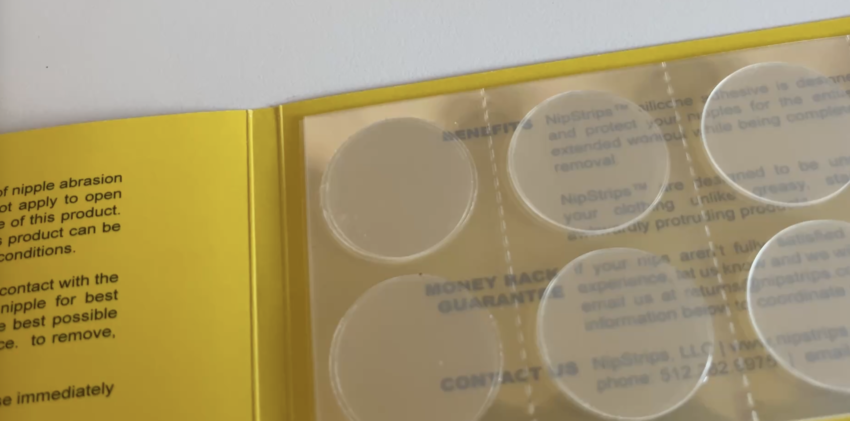
NipStrips are small, clear, self-adhesive silicone discs designed to protect your nipples from rubbing against your clothing while running or exercising.
Each disc measures approximately one inch (25 mm) in diameter.
They’re designed to be discreet beneath your running shirt, easy to apply, and comfortable to remove.
Unlike anti-chafing lubricants, which reduce friction by creating a slippery barrier, NipStrips physically cover the nipple to prevent direct contact with your clothing.
When Stuart from NipStrips contacted me back in 2017 and asked whether I’d like to try them, I figured I had very little to lose.
After all, I’d already had success using RockTape and Squirrel’s Nut Butter. Could a dedicated nipple guard really offer anything better?
There was only one way to find out.
My NipStrips Review: Tested During a 100-Mile Race
I’ll start by saying that I’ve never been particularly prone to nipple chafing.
Short runs and races have rarely caused me any problems, and for longer distances I’ve generally relied on RockTape or Squirrel’s Nut Butter.
Nevertheless, nipple protection is something I take seriously when preparing for a marathon or ultramarathon.
I initially tested NipStrips during several longer training runs, with encouraging results.
Then came the real test.
I wore them during a local 24-hour race where the conditions were hot, humid, and incredibly sticky.
If you’ve ever run for hours in that sort of weather, you’ll appreciate just how uncomfortable sweat-soaked running clothing can become.
During the event, I covered 100 miles in just under 18 hours.
That’s a lot of running, a lot of sweating, and an enormous amount of potential friction.
So how did the NipStrips perform?
Brilliantly.
Throughout the entire effort, I experienced:
- No nipple chafing.
- No irritation or discomfort from the NipStrips.
- No need to replace or reapply them during the race.
They stayed in place throughout my run, despite the challenging conditions.
For me, that was the most impressive part of the experience.
It’s one thing for a product to perform well during a relatively short training run. It’s quite another to remain effective throughout nearly 18 hours of continuous running.
Of course, everyone’s skin and running conditions are different, so I can’t promise you’ll get identical results.
But based on my own experience, NipStrips certainly passed the ultramarathon test.
How to Apply NipStrips Correctly
Applying NipStrips is straightforward, although it’s worth taking a little care to ensure they adhere properly.
Here’s the application process:
- Start with clean, dry skin. Make sure the nipple area is free from sweat, moisture, and lubricants.
- Remove the NipStrip from its backing. Try to avoid touching the adhesive surface unnecessarily.
- Move any chest hair away from the nipple. This helps create a better seal against the skin.
- Position the NipStrip carefully. Place it directly over the nipple and press gently to secure it.
- Avoid repositioning it. Once applied, leave it in place rather than repeatedly removing and adjusting it.
- Remove gently after your run. Carefully peel the NipStrip away from your skin and discard it.
For the best results, I’d recommend applying NipStrips before you start sweating.
As with any adhesive product, test them during training before relying on them for a marathon or other important race.
If you experience irritation or an adverse skin reaction, stop using them.
NipStrips vs. Athletic Tape vs. Anti-Chafing Balm
Having used all three approaches, I think each has its place.
| Feature | NipStrips | Athletic Tape | Anti-Chafing Balm |
|---|---|---|---|
| Protection method | Covers the nipple | Covers the nipple | Reduces friction |
| Application | Peel and stick | Cut and apply | Rub onto skin |
| Reapplication | None needed in my 100-mile test | Depends on adhesion | May be needed |
| Removal | Gentle peeling | Can pull on skin or hair | Washes off |
| Best suited to | Runners wanting dedicated nipple protection | Runners who already use sports tape | Runners preferring a lubricant |
For shorter runs, an anti-chafing balm may be all you need.
Athletic tape is another practical option, especially if you already have some in your running gear collection.
However, I particularly liked the convenience of NipStrips.
They’re purpose-made for nipple protection, don’t require cutting strips of tape, and performed exceptionally well during my long-distance test.
NipStrips: Pros and Cons
No running product is perfect for everyone, so here’s how I’d summarize my experience.
What I Liked
- Excellent performance: No nipple chafing during my 100-mile race.
- Impressive staying power: I didn’t need to replace them during nearly 18 hours of running.
- Simple application: No cutting tape or dealing with messy lubricants.
- Discreet appearance: The clear silicone discs are designed to be unobtrusive beneath clothing.
- Comfortable removal: I experienced no problems removing them after use.
- Useful for long-distance running: Particularly appealing for marathon and ultramarathon preparation.
Things to Consider
- NipStrips are disposable, so regular use means purchasing replacements.
- They’re designed for nipple protection rather than preventing chafing elsewhere on the body.
- Adhesive products may not suit everyone, particularly runners with sensitive skin.
- Individual results can vary depending on sweat, skin condition, clothing, and running duration.
Are NipStrips Worth Buying?
Based on my experience, absolutely.
I was impressed by how well they performed during my training runs, but it was their performance during that hot and humid 100-mile race that really won me over.
There was no need to stop and adjust them, no need to apply additional protection, and most importantly, no nipple chafing.
That’s exactly what I want from a product designed to solve a specific running problem.
If you’re someone who regularly struggles with sore or bleeding nipples during long runs, I’d certainly consider giving NipStrips a try.
They’re also worth considering if you’re preparing for a marathon, ultramarathon, or other endurance event where avoiding unnecessary discomfort is especially important.
Check the latest NipStrips price and availability on Amazon
Frequently Asked Questions About Nipple Chafing and NipStrips
How do I stop my nipples from chafing when running?
The most common approaches are using an anti-chafing lubricant, covering your nipples with athletic tape, wearing comfortable moisture-wicking clothing, or using dedicated nipple guards such as NipStrips.
Experiment during training to discover which option works best for you.
Do NipStrips work for marathon runners?
In my experience, yes. I tested NipStrips during several long training runs and a 100-mile race, where they provided effective protection throughout the event.
Although that doesn’t guarantee the same results for everyone, my experience suggests they’re well worth considering for marathon and ultramarathon runners.
Can NipStrips stay on during sweaty runs?
They certainly did during my testing.
I wore NipStrips throughout a hot, humid 100-mile race without needing to replace them.
For the best chance of secure adhesion, apply them to clean, dry skin before you start running.
Are NipStrips painful to remove?
I found them comfortable to remove after running.
However, adhesive sensitivity varies, and runners with sensitive skin or chest hair may have a different experience.
Always remove them gently and follow the product’s instructions.
Can I use regular tape instead of NipStrips?
Yes. Athletic tape can be an effective way to protect your nipples from friction.
I’ve personally used RockTape successfully during long training runs and races.
NipStrips simply offer a convenient, ready-made alternative designed specifically for nipple protection.
What should I do if my nipples are already chafed?
If your nipples are already irritated, gently clean the area, keep it dry, and avoid further rubbing while the skin heals.
Don’t apply adhesive products directly to broken or damaged skin unless the product instructions specifically permit it.
If the area becomes increasingly painful, swollen, or shows signs of infection, seek medical advice.
Where can I buy NipStrips?
NipStrips have been sold through Amazon, where you can check current product availability, pack sizes, and pricing.
Final Thoughts: Don’t Let Nipple Chafing Ruin Your Run
Nipple chafing might not be the most glamorous running topic, but anyone who’s experienced it knows how uncomfortable it can become.
Fortunately, it’s also one of those problems that’s often easy to prevent with a little preparation.
I’ve had good results with athletic tape and anti-chafing lubricants over the years, but NipStrips impressed me with their simplicity and performance.
Covering 100 miles in hot, humid conditions without a single nipple-chafing issue was more than enough to convince me they were worth recommending.
Whether you’re preparing for your first half marathon, training for a marathon, or tackling an ultramarathon, it’s worth sorting out your nipple protection before race day.
After all, you’ve got enough to worry about over 26.2 miles without adding sore nipples to the list.
Happy running!
Originally tested and reviewed in May 2017. This article has been expanded with additional running advice and product information.
Product disclosure: NipStrips were originally supplied free of charge for review. All opinions are based on my personal experience. As an Amazon Associate I earn from qualifying purchases.